
Cool-season lawns from bare dirt
New Lawn Hydroseeding in Albany, NY
Bluegrass, rye and fescue blends sprayed with fiber mulch onto ground we have checked first.
- No-charge yard walk-through, then an estimate in writing
- Seed mixes picked for sand, silt or clay soil
- Watering plan handed over with every new lawn
Starting a Lawn From Bare Ground
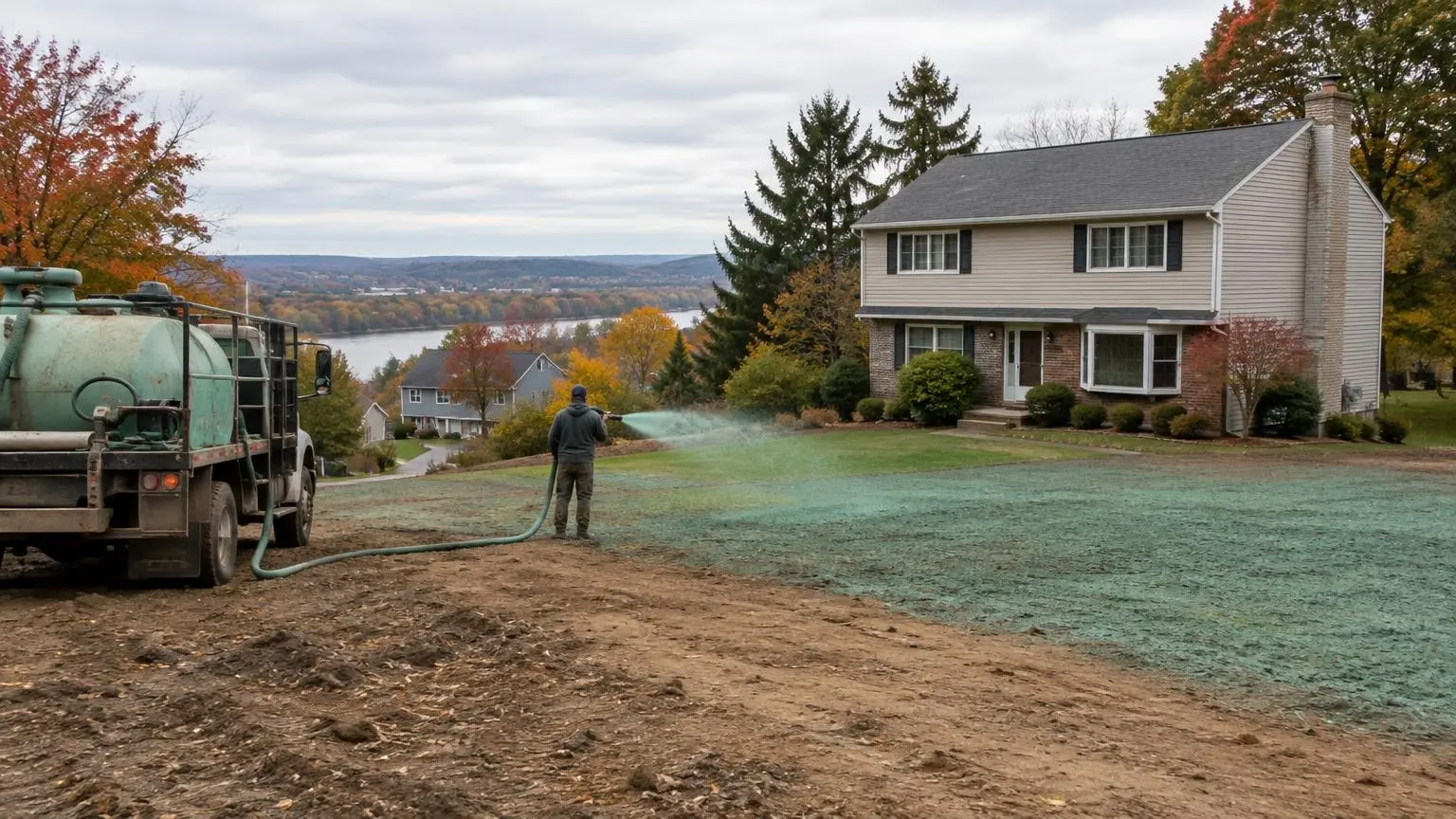
New lawn hydroseeding in Albany is how most bare yards around the city become grass: after a new house goes up, after a septic or sewer line is replaced, after a patio or addition, or when an old lawn is too far gone to save. Once the soil is ready, one pass of the hose covers the whole area with a slurry carrying the seed, starter fertilizer, tackifier and a wood or paper fiber mulch. The result is a green-tinted mat that holds the seed in place and keeps it damp until it sprouts. For homeowners comparing lawn installation options, a hydroseed lawn is the middle ground between sod and dry seed on both price and speed.
Reading the soil first
Albany yards do not all start from the same dirt. On the west side and in the neighborhoods that were once Pine Bush, the soil is arid and sandy, left by Glacial Lake Albany. Water drains through it quickly, which is fine for a basement and hard on a seedling. Closer to the rivers, soils like the USDA Hudson series have a brown silt loam surface about 5 to 12 inches thick over firm, sticky silty clay. That clay holds water near the surface in spring and sheds it in summer storms. Builder lots add a third case: compacted fill, often with the original topsoil stripped off and sold. We look at what is actually there before picking the seed mix, the mulch rate and whether topsoil or compost has to go down first.
Seed mixes for this climate
Albany is a cool-season grass town. The city is in hardiness zone 6a near the river and 5b at its western edge, with cold, snowy winters and short stretches of summer heat. Our blends lean on Kentucky bluegrass for its ability to spread and repair itself, perennial ryegrass for quick cover, and fine or tall fescue for shade and dry spots. A sunny sandy lot gets more fescue; a shaded yard under old maples gets more fine fescue; a lot that will see kids and dogs gets more bluegrass and rye.
Timing a new lawn
Our first choice is late August through September, when the soil is still warm and the nights are cool. September at the airport averages highs near 74 degrees, which is close to ideal for germination, and the lawn gets the rest of the fall to root. Spring is the backup: the soil warms slowly, April still averages lows around 37 degrees, and spring grass then has to survive July heat. If you are closing on a new house in October, we will tell you honestly whether there is enough season left, or whether the yard should be stabilized for winter and seeded later. Get a free estimate
How big a job it is
A typical city lot in Albany has a small front yard and a narrow back yard, often with a driveway or alley to work around. Suburban lots in Colonie, Bethlehem or Clifton Park are larger, and new subdivision lots can run to a half acre or more of bare ground. Hydroseed hoses reach a long way, so tight access is rarely a problem, but long hose runs, fences and steep side yards do add time.
Hydroseeding cost and what drives it
The hydroseeding cost for a residential lawn is mostly about square footage, but prep often matters more. A flat yard with good topsoil already graded is the cheapest job. Rock raking, fine grading, imported topsoil, steep banks and long hose runs from the truck all add to it. National guides publish per-square-foot ranges, listed below, and most hydroseeding services have a minimum job charge. Our written estimate lists each of those items separately, so none of the cost is buried in one lump figure.
Why lawn seeding fails on new lots
Most failed lawns we are asked to redo did not fail because of the seed. They failed because the seed went onto packed subsoil with no topsoil, onto a grade that sent water toward the house and puddled, or into late October when there was no season left. Some failed because watering stopped after a week. Grass seeding is forgiving when the ground is right and unforgiving when it is not. That is why our estimate spends as much time on prep as on the seed itself, and why we give you a written watering schedule instead of a quick reminder at the curb.
Sod vs hydroseed on your lot
Sod gives an instant lawn but has to root into the soil beneath it, which is slow on dry sand and on hard, compacted clay. It also costs several times more per square foot. Dry seed is cheaper, but on a bare Albany lot a July thunderstorm can carry it into the street. Hydroseed sits in between, and the mulch layer is what protects the seed while it sprouts. By University of Nebraska Extension's account, hydroseeded grass usually appears in 5 to 7 days, while dry seed needs two to three weeks.
Living with a new hydroseed lawn
The first three weeks are about keeping the top of the soil damp. On sand that may mean two or three brief waterings on a warm day; on clay, lighter and less often, so the seedbed does not stay soggy. Expect the first mow around four to six weeks, once grass is three to four inches tall, with a sharp blade set high. Hold off on weed killers until the lawn has been mowed a few times. We leave written instructions with every job.
What a New Lawn Includes
The pieces that go into a hydroseed lawn, depending on what your lot needs.
Soil check and prep plan
We look at sand, clay or fill and decide on topsoil, compost or grading before seeding.
Rock raking and fine grading
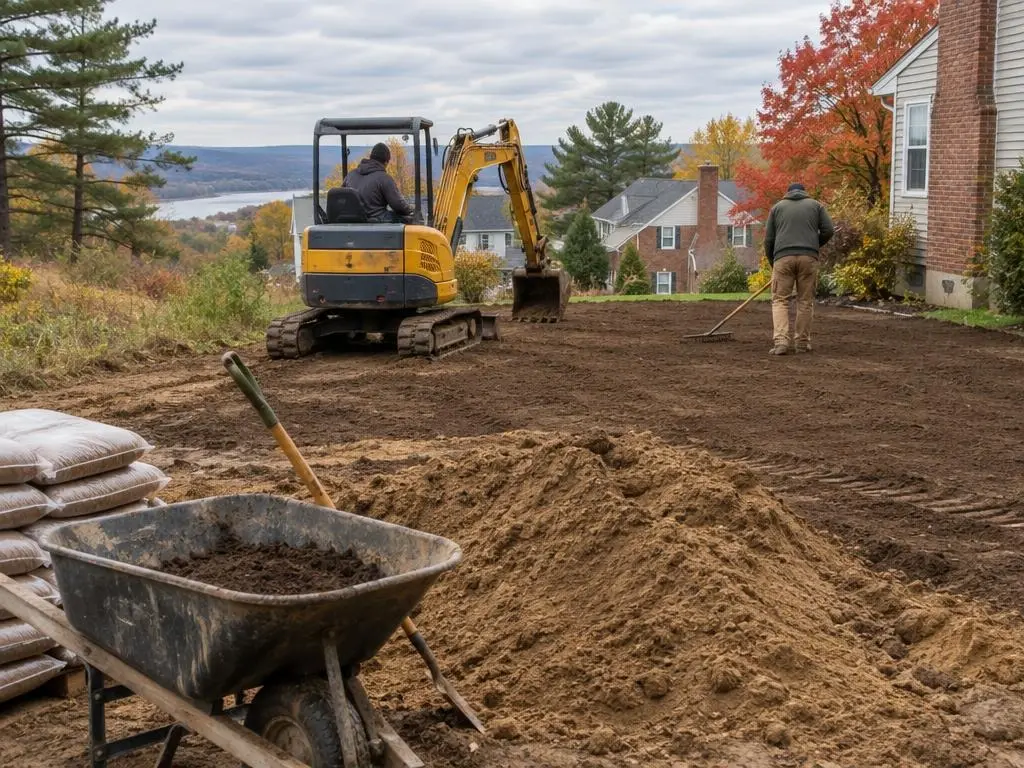
Stones, roots and construction debris removed, and the surface smoothed so water runs away from the house.
Cool-season seed blends
Bluegrass, perennial rye and fescue mixed for sun, shade and soil type.
Fiber mulch and tackifier
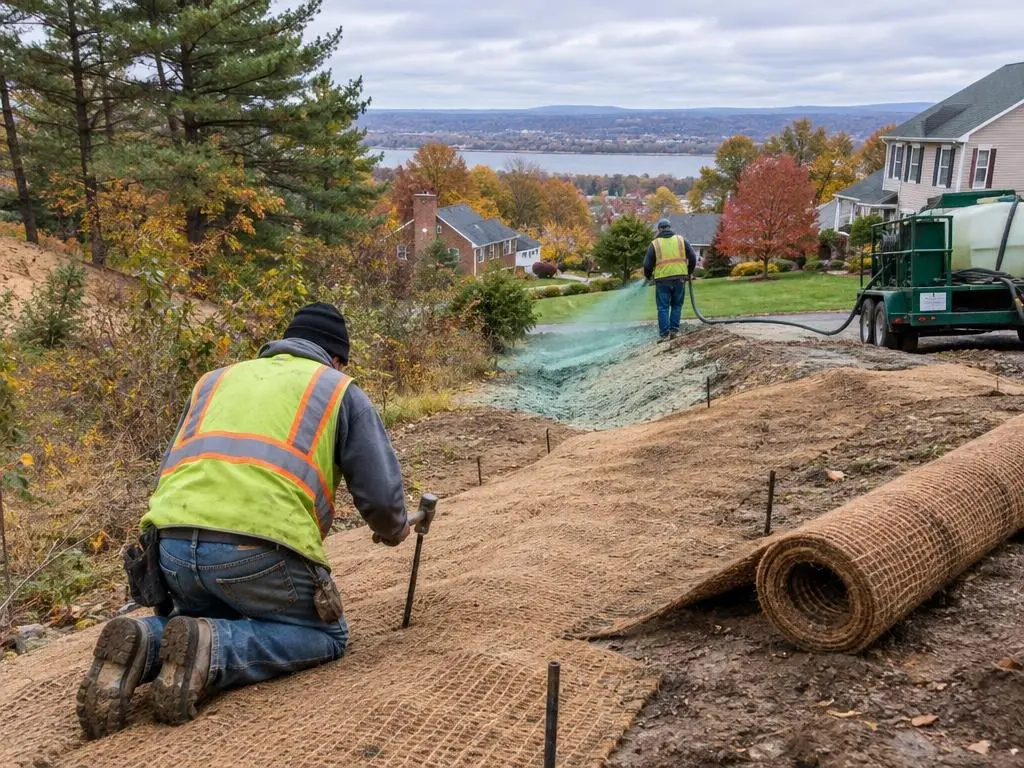
Holds seed in place on flat ground and gentle slopes and keeps it from drying out.
Starter fertilizer
Mixed into the slurry so young grass has nutrients from day one.
Watering and mowing plan
Written schedule for the first weeks, adjusted for sandy or clay soil.
Typical Hydroseeding Cost for a Lawn
| Work | Published range (source) |
|---|---|
| Hydroseeding per sq ft (HomeGuide) | $0.12 to $0.35 |
| Hydroseeding per sq ft (Angi) | $0.07 to $0.26 |
| 5,000 sq ft lawn (HomeGuide) | $1,000 to $1,750 |
| Minimum job charge (LawnStarter) | $300 to $500 |
| Steep slope surcharge per sq ft (HomeGuide) | $0.05 to $0.10 added |
| Sod, installed, per sq ft as a point of comparison (HomeGuide) | $1 to $4 |
Figures come from national cost guides and are not Albany quotes. Topsoil, grading, slope and access all move the final number. For budgeting only. The amount in our written proposal is what is billed.
From Bare Dirt to First Mow
1. Site visit
We measure the area, check soil, slope and water access, and talk about timing.
2. Written estimate
Square footage, prep, topsoil if needed, seed mix and mulch rate, each on its own line.
3. Prep the ground
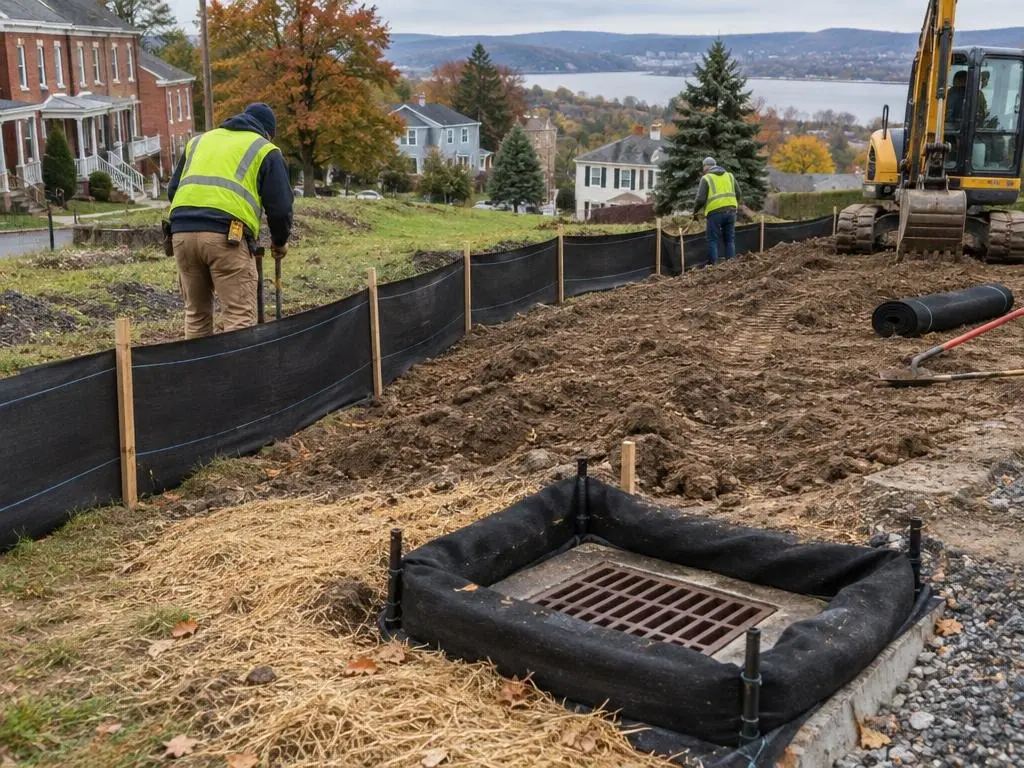
Rock raking, fine grading and topsoil so the seedbed is loose, smooth and sloped away from the house.
4. Spray the slurry
Seed, mulch and fertilizer applied in one pass, with edges and banks covered.
5. Water and wait
You follow the watering plan; sprouts usually show within one to two weeks.
6. First mow
Around four to six weeks, once grass reaches three to four inches.
Why Choose Us for New Lawn Hydroseeding
Soil-matched mixes
Sand and clay yards get different seed blends and watering plans.
Straight talk on timing
We will not seed a lawn into a season it cannot survive.
Prep included in the quote
You see grading and topsoil costs up front, not as surprises.
New Lawn Hydroseeding Questions
How soon can people walk across freshly hydroseeded grass?
Keep off it except to move hoses until after the first or second mow, usually five to seven weeks. Light use after that is fine; heavy play can wait until the following season.
Why is my hydroseed green before the grass comes up?
The mulch has a green dye so we can see coverage while spraying. The color fades as the grass grows through it.
Do I need topsoil before hydroseeding?
Not always. If the existing soil is loamy and loose, no. If it is pure sand, compacted builder fill or bare clay subsoil, a few inches of topsoil or compost makes a big difference.
What does hydroseeding cost for an average Albany yard?
National guides land anywhere from about $0.06 to $0.35 per sq ft, and HomeGuide's figure for a 5,000 square foot yard is $1,000 to $1,750. Prep work and slope shift that number, which is why we quote once we have seen the yard.
Can I hydroseed over my old lawn?
Hydroseed needs contact with soil. A weedy old lawn is usually killed off, scraped or tilled and graded first. If the lawn is just thin, overseeding may be the better choice.
New Lawn Hydroseeding Service Areas
- Hydroseeding in Albany, NY
- Hydroseeding in Colonie, NY
- Hydroseeding in Guilderland, NY
- Hydroseeding in Bethlehem, NY
- Hydroseeding in Clifton Park, NY
- Hydroseeding in Halfmoon, NY
- Hydroseeding in Malta, NY
- Hydroseeding in Saratoga Springs, NY
- Hydroseeding in Schenectady, NY
- Hydroseeding in Troy, NY
- Hydroseeding in Niskayuna, NY
- Hydroseeding in Glenville, NY
- Hydroseeding in Rotterdam, NY
- Hydroseeding in East Greenbush, NY
- Hydroseeding in North Greenbush, NY
- Hydroseeding in Brunswick, NY
- Hydroseeding in Ballston, NY
- Hydroseeding in Wilton, NY
- Hydroseeding in Cohoes, NY
- Hydroseeding in Waterford, NY
- Hydroseeding in Stillwater, NY
- Hydroseeding in Schodack, NY
- Hydroseeding in New Scotland, NY
- Hydroseeding in Rensselaer, NY
Get a New Lawn Hydroseeding Estimate
Free site visits for new lawns in Albany and nearby towns.