
Saratoga sand plains
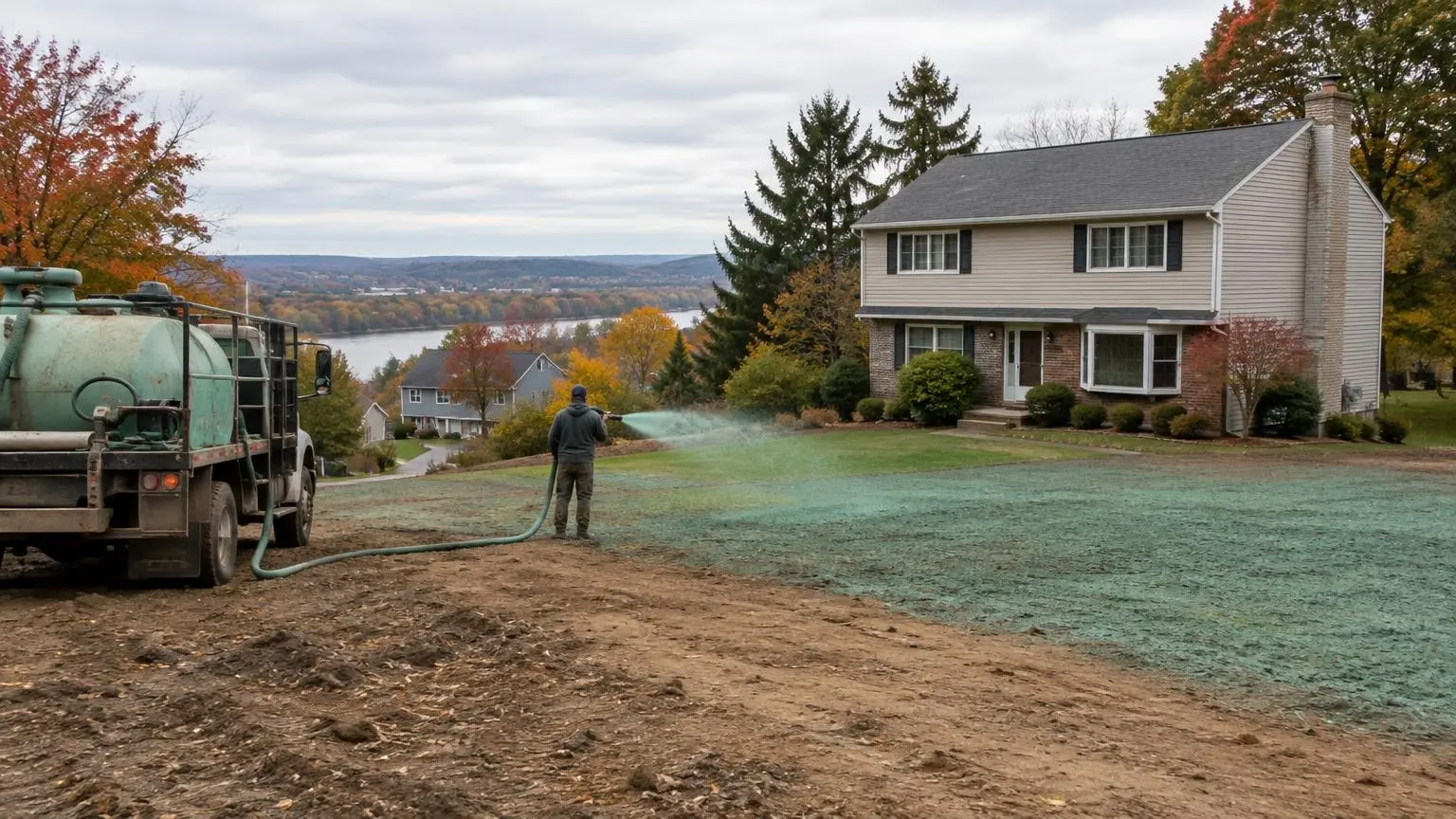
Hydroseeding in Wilton, NY
Flat, sandy ground and an endangered butterfly that depends on it.
- No-charge yard walk-through, then an estimate in writing
- Seed mixes picked for sand, silt or clay soil
- Watering plan handed over with every new lawn
Grass on the Sand Plains
Hydroseeding in Wilton is mostly done on sand. The town sits largely on a flat plain, and its sandy soils are part of what the state protects at the Saratoga Sand Plains Wildlife Management Area, about 1,000 acres of state land in Wilton and Northumberland. Those soils support blue lupine, the only plant Karner blue butterfly larvae eat.
What sand does to a new lawn
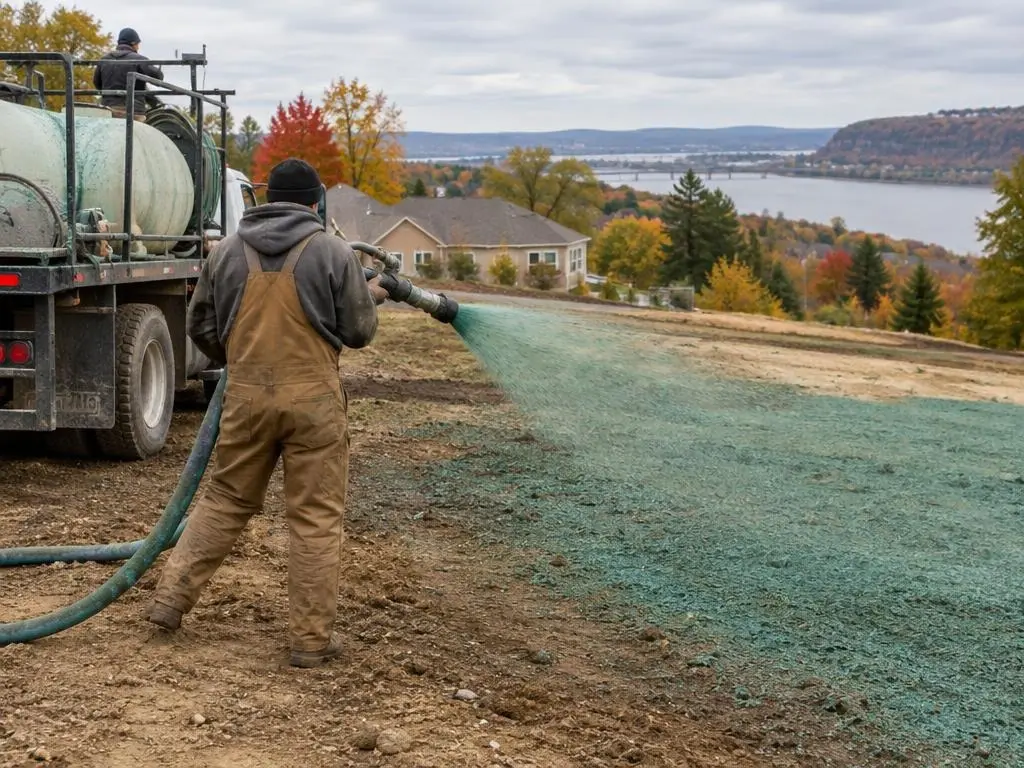
Sand drains quickly and holds few nutrients. Seed on bare sand can dry out within hours on a sunny day, and fertilizer washes through fast. Hydroseeding gives us a mulch layer that holds water at the surface. On the sandiest lots we recommend working in topsoil or compost first, then watering lightly and often for the first few weeks.
Living next to a protected habitat
The Wilton Wildlife Preserve and Park was set up in 1996 to protect habitat for the federally endangered Karner blue butterfly. If your lot backs onto preserved land, we keep work and fill on your side and never spread seed into those areas. On some edge areas, a native planting can be a better choice than lawn.
1990s growth
Wilton grew suburban and commercial areas in the 1990s because of its location next to Saratoga Springs. The Wilton Mall and big retail near Exit 15 of the Northway reflect that. The town's population rose from 12,511 in 2000 to 17,361 in 2020, so new house lots are common.
Mount McGregor to the north
Mount McGregor, the highest peak of the Palmertown Range, lies mostly north of town, and Grant Cottage sits on its slopes. Lots in the hillier north end deal with slopes as well as sand.
Typical Wilton work
- New lawns on sandy lots
- Topsoil and compost before seeding
- Commercial seeding near Exit 15
Get a free estimate or call (518) 690-6268.
Wilton Soil and Habitat
- Sand plains. The Saratoga Sand Plains WMA is about 1,000 acres of state land in Wilton and Northumberland; its sandy soils support blue lupine.
- Karner blue. The Wilton Wildlife Preserve and Park was founded in 1996 to protect habitat for the federally endangered Karner blue butterfly.
- Flat plain. The town is mostly located on the flat plain surrounding the Hudson River.
- Growth. Wilton's population rose from 12,511 in 2000 to 17,361 in 2020, with 1990s growth near I-87 Exit 15.
Wilton Questions
Why do Wilton lawns dry out so quickly?
Sandy soil drains quickly. Adding organic matter and watering lightly and often helps new grass get established.
Should I add topsoil before hydroseeding on sand?
On very sandy lots, yes. Even a modest layer of topsoil or compost improves moisture and nutrient holding.
My lot borders preserve land. Anything to watch?
Keep work, fill and seed on your side of the line. Native plants can be a good choice along that edge.
Do you seed commercial sites near Exit 15?
Yes, including swales, detention areas and large lawn areas.
Hydroseeding Near Wilton
- Hydroseeding in Albany, NY
- Hydroseeding in Colonie, NY
- Hydroseeding in Guilderland, NY
- Hydroseeding in Bethlehem, NY
- Hydroseeding in Clifton Park, NY
- Hydroseeding in Halfmoon, NY
- Hydroseeding in Malta, NY
- Hydroseeding in Saratoga Springs, NY
- Hydroseeding in Schenectady, NY
- Hydroseeding in Troy, NY
- Hydroseeding in Niskayuna, NY
- Hydroseeding in Glenville, NY
- Hydroseeding in Rotterdam, NY
- Hydroseeding in East Greenbush, NY
- Hydroseeding in North Greenbush, NY
- Hydroseeding in Brunswick, NY
- Hydroseeding in Ballston, NY
- Hydroseeding in Cohoes, NY
- Hydroseeding in Waterford, NY
- Hydroseeding in Stillwater, NY
- Hydroseeding in Schodack, NY
- Hydroseeding in New Scotland, NY
- Hydroseeding in Rensselaer, NY